Mystery Produce Program Connects Community to Farm-to-School Success in CT
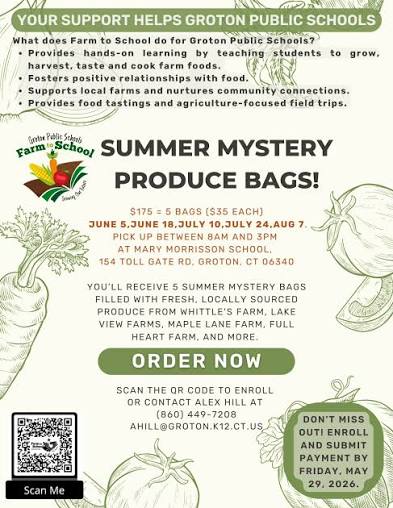
Beyond the benefits its farm-to-school program delivers for student menus, Groton Public Schools in Connecticut has committed to support community members as well as local farms and food producers. The district’s popular Mystery Produce Bag program helps get farm-fresh and local foods out to the community while engaging students in the process, providing a source of revenue for the school nutrition program and supporting local businesses through the spring, summer and fall seasons.
“Our Mystery Produce Bags are an extension of our National School Lunch Program, School Breakfast Program and farm-to-school program,” said Food Service Director Ernest Koschmieder, who shared an example from the spring: “Students enjoyed fresh strawberries from Holmberg Farms as part of their school lunch, and those same locally grown strawberries were included in the Mystery Produce Bags, allowing the community to enjoy fresh, local foods our students experience every day.”
The seasonal subscription program that began as a fall offering has expanded into three seasons thanks to overwhelming interest from district staff and the community. Each $175 subscription includes five scheduled pickups for the season, with subscribers receiving a mystery bag filled with locally grown produce and specialty items based on availability.
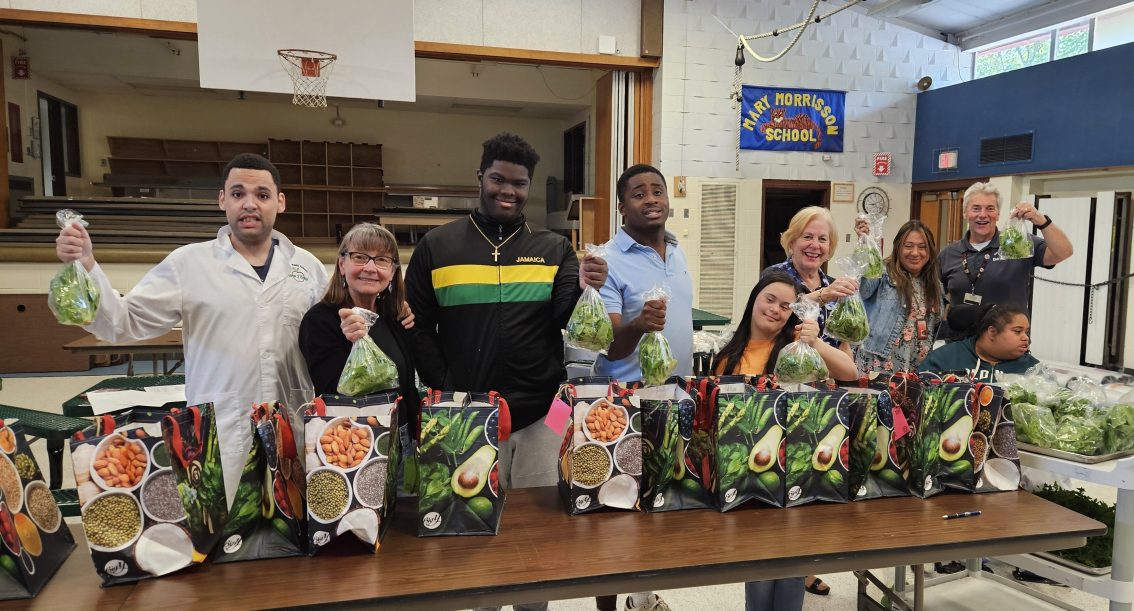
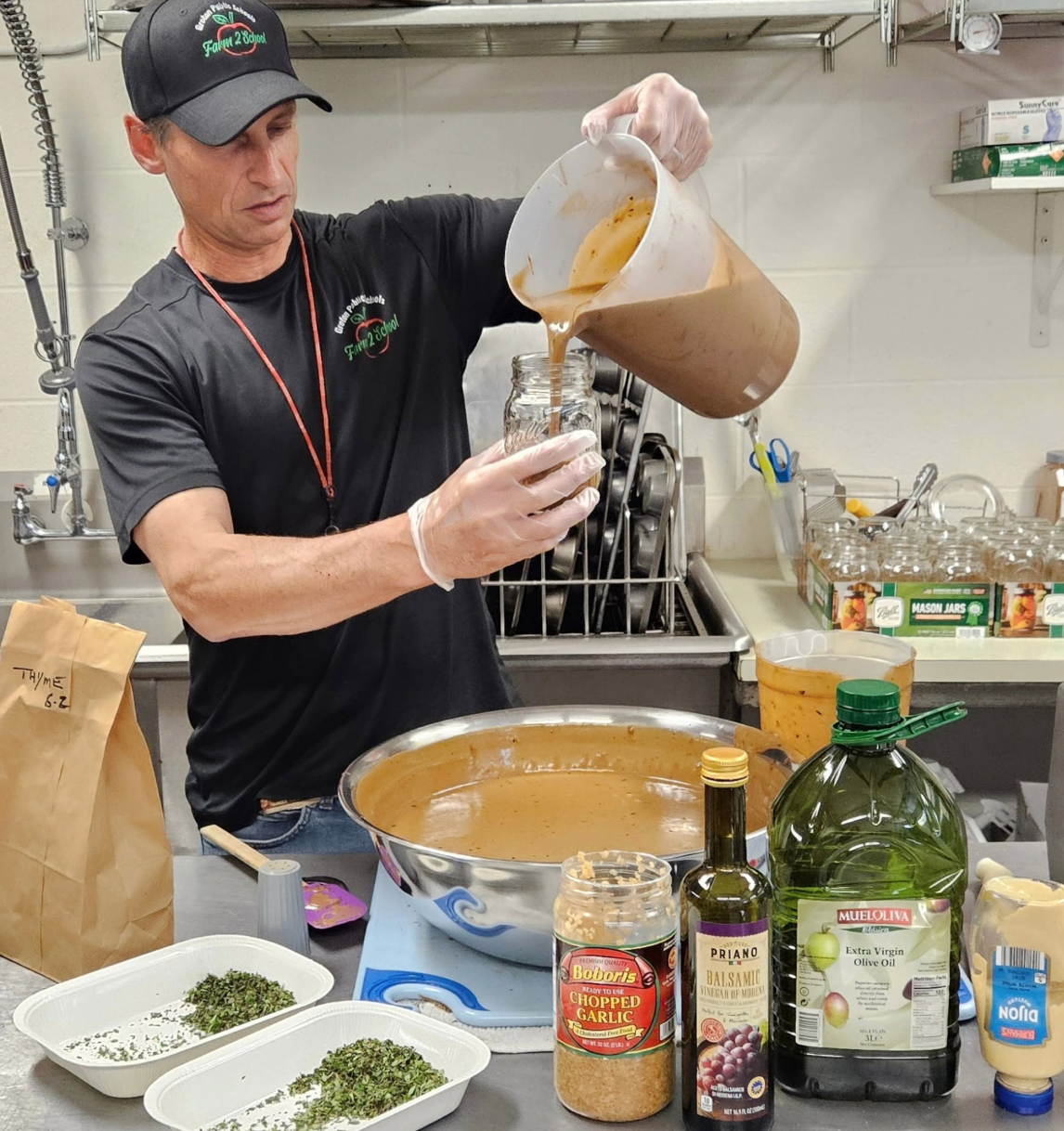
Students play a key role in helping make the Mystery Produce Bag program possible. High school culinary students work alongside Groton school nutrition staff to prepare scratch-made treats such as pumpkin bread, blueberry lemon bread and apple pie, while Transition Academy students help pack each bag. Their involvement provides meaningful hands-on learning experiences.
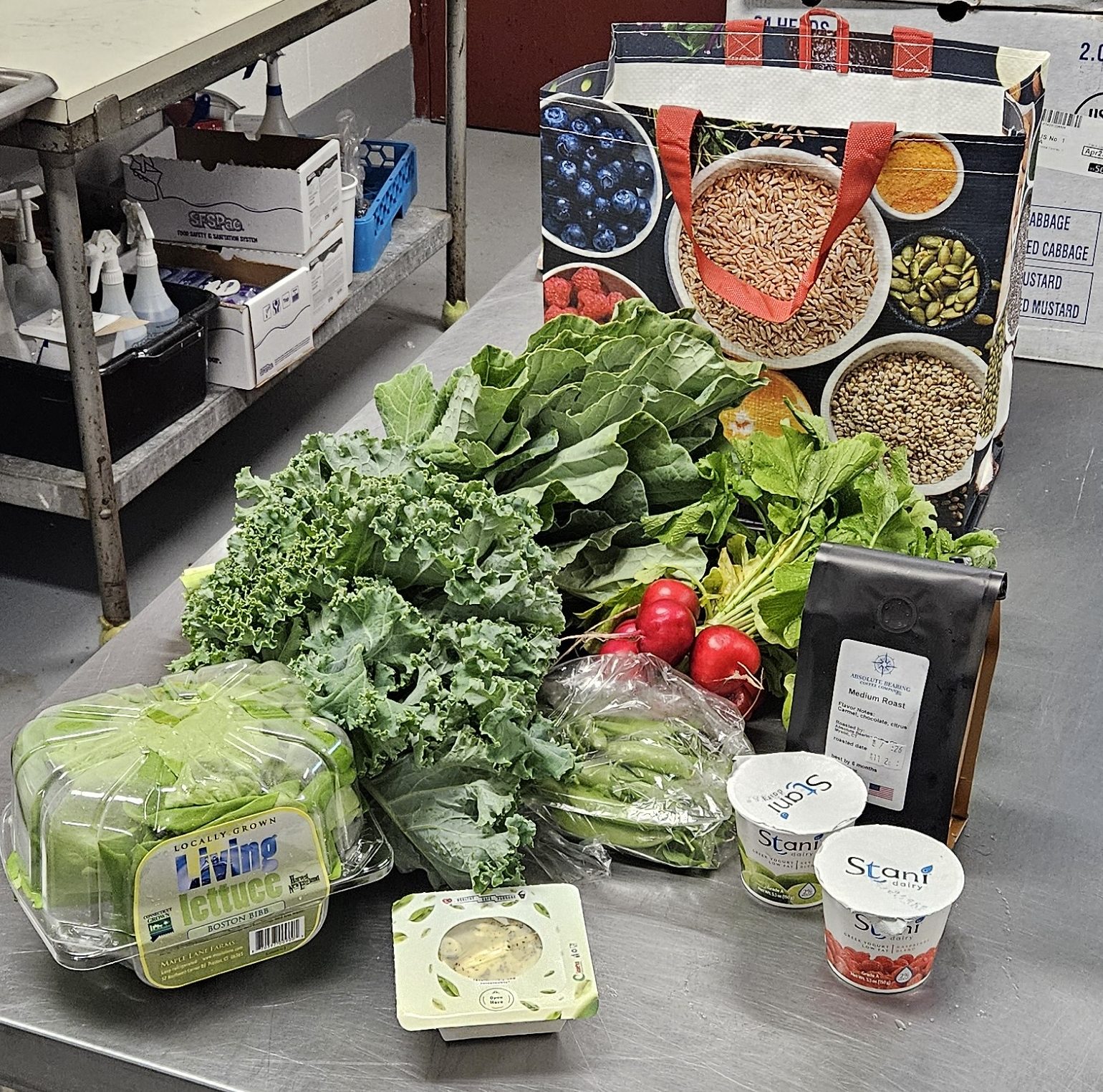
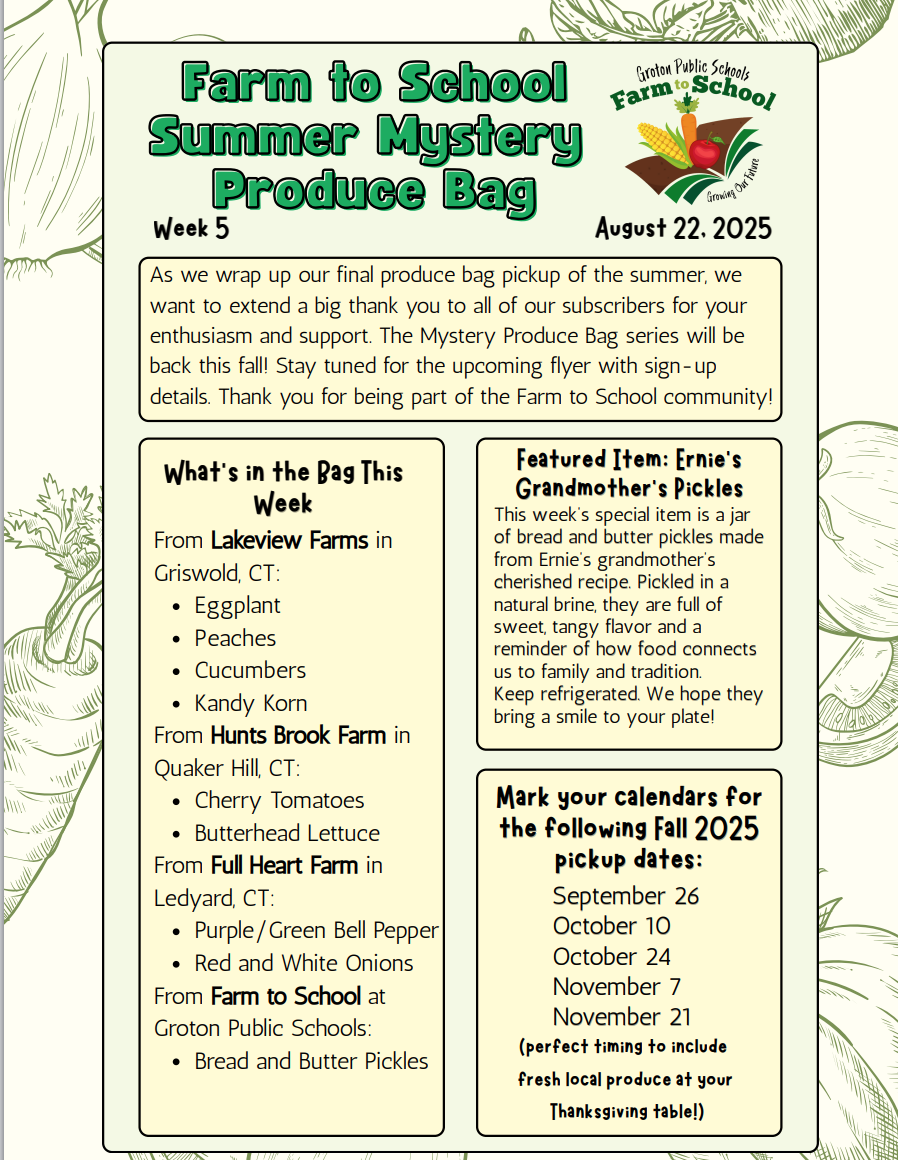
Depending on the time of year, bags may include local honey, maple syrup, yogurt, coffee from a local roaster, apple salsa and herb plants. Each bag also includes a newsletter that introduces subscribers to the featured farms and provides recipes to help them enjoy the seasonal ingredients.
The program is intentionally limited to about 50 subscriptions each season. Most subscribers are Groton Public Schools faculty, along with parents and community members, including local police officers, city employees and senior center participants. Revenue from the subscriptions helps support the nutrition program, including the district’s greenhouse and other farm-to-school initiatives.
Koschmieder credits USDA grant funding and support from local businesses with helping grow the district’s farm-to-school program, enabling this beneficial program expansion.
“We’re fortunate to have dedicated staff who oversee our greenhouse, school gardens, local farm partnerships and the Mystery Produce Bag program,” said Koschmieder. “That support has made it possible for our farm-to-school program to thrive.”
Now in its fourth year, the Mystery Produce Bags continue to strengthen connections between schools, local farms and the community, showing that farm to school can flourish well beyond the lunch line.

